Mudroom Cabinetry & Built-Ins in Bozeman, MT | Lockers, boot benches and drying cubbies for real Montana winters
We're Custom Cabinets Bozeman MT, and we build mudroom cabinetry for families who come in covered in snow six months a year: lockers with hooks and cubbies, benches with removable boot trays, ventilated storage for wet gear and a drop zone for keys and phones. Everything is finished to handle meltwater.
Free design consultationTell us about the room. We call back to book a measure.
Mudroom Cabinetry & Built-Ins in and around Bozeman MT
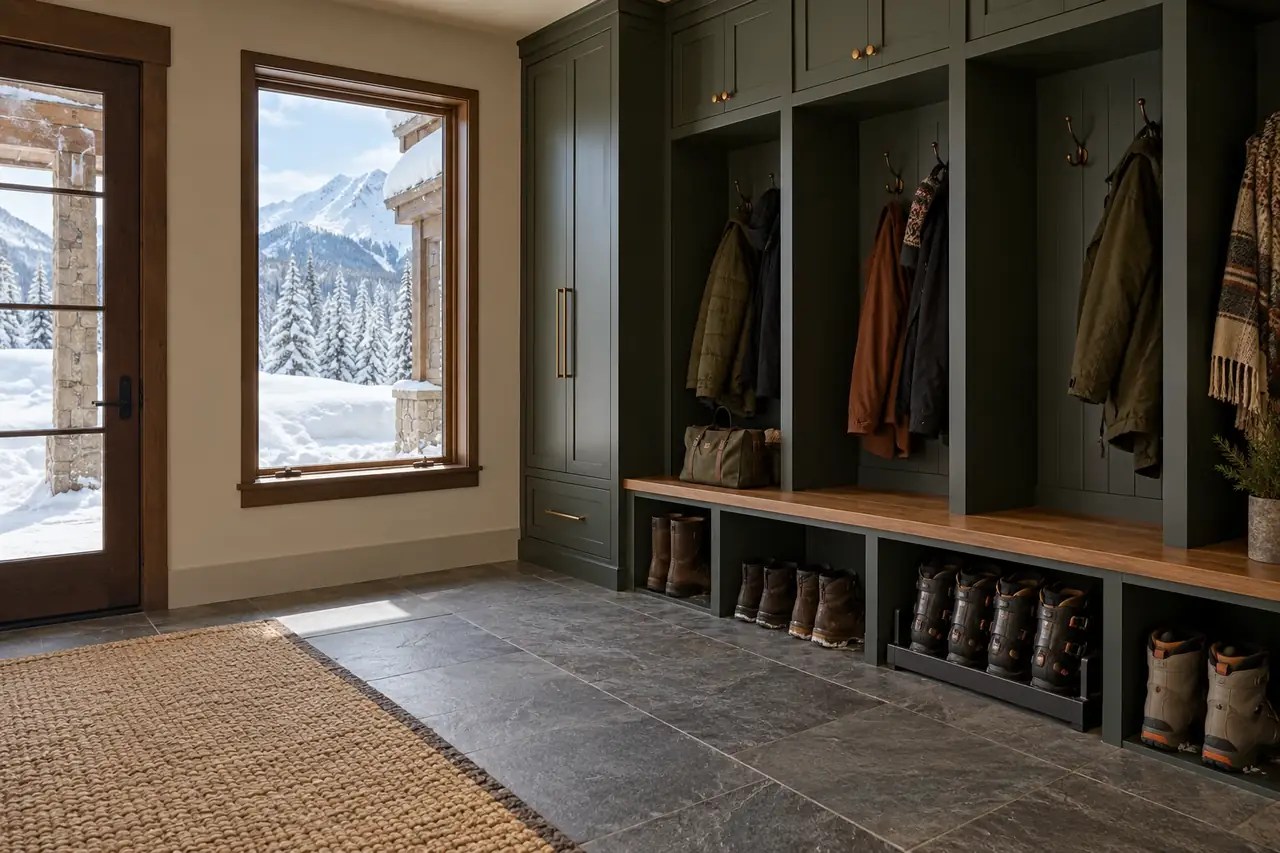
In a Bozeman house, the mudroom is where skis, boots, parkas, dog leashes and backpacks land every day from November to April. Open hooks and a bench are not enough. We build mudrooms with a place for every person and every piece of gear, and we assume it will all arrive wet.
Why mudrooms stop working
| What goes wrong | Why it happens | What we do about it |
|---|---|---|
| Swollen bench bottom | Wet boots sitting on raw wood. | Removable trays and a sealed cabinet floor. |
| Musty smell | Wet gear shut in closed cabinets. | Ventilated doors and open cubbies. |
| Hooks ripped out | Screwed only into drywall. | Hooks fixed to solid backing boards. |
How we build a mudroom
Count
We count people, pets and gear, and note what arrives wet.
Plan
You approve locker widths, bench and cubby layout.
Build
Cabinets are built and finished for a wet room.
Install
We fix everything to studs and fit trays and hooks.
Hooks and a bench compared with a real mudroom
| The usual approach | How we do it |
|---|---|
| Coats piled on a row of hooks. | A locker for each person with hooks at two heights. |
| Boots in a puddle on the floor. | Boot trays that catch meltwater and lift out to clean. |
| Gloves and hats in a damp heap. | Ventilated cubbies that let them dry overnight. |
| Keys and phones scattered on the counter. | A drop drawer with power for charging. |
What a Montana mudroom needs
- A locker per person with hooks, a shelf and a cubby.
- A bench with removable, washable boot trays.
- Ventilated storage so wet gloves and hats dry.
- A drop zone with a drawer for keys, phones and chargers.
Mudroom details worth planning
Ski boot drying
A heated boot dryer can sit in a cubby with an outlet planned in.
Dog stations
A pull-out bowl drawer and a leash hook keep pet gear together.
Doors or open
Open lockers dry faster. Doors hide clutter. We often mix both.
Durable surfaces
Bench tops get a hard, water-resistant finish or a solid surface top.
Mudroom locker dimensions
- Locker width
- 15 to 24 inches per person
- Bench height
- 18 inches with 15 to 18 inches of depth
- Hook heights
- About 48 inches for kids and 66 for adults
- Boot cubby
- At least 14 inches tall to fit winter boots
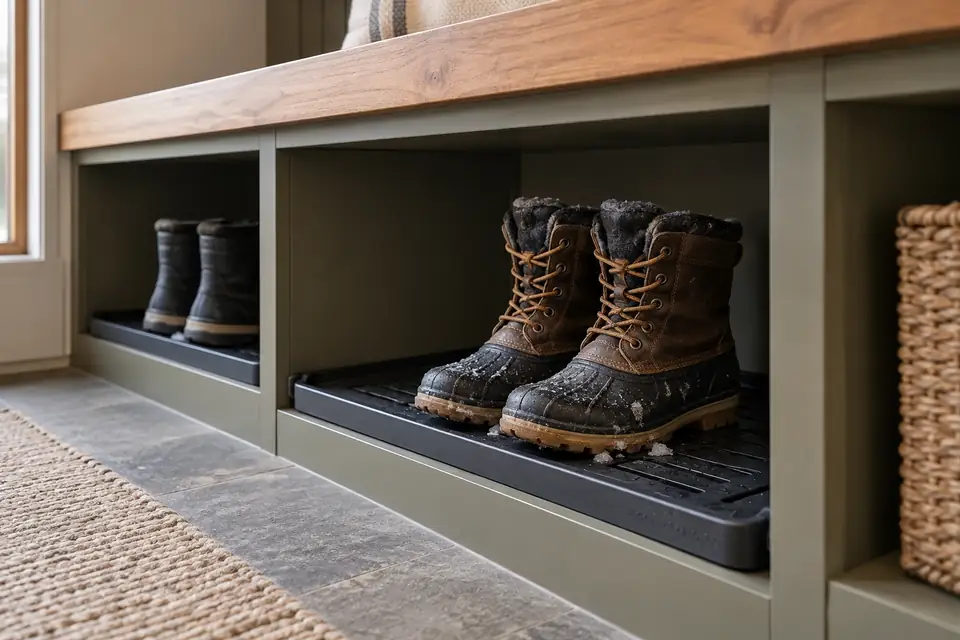
Where the snowmelt goes
Boots come in carrying snow crusted with road de-icer. It melts in minutes and has to go somewhere. We build boot cubbies with removable trays that catch the water, and we keep the wood above the tray so nothing sits in it.
The trays lift out and wash in the sink. Underneath, the cabinet floor is finished like a countertop, so the occasional spill does not soak in.
Mudroom Cabinetry & Built-Ins: terms we use
- Boot tray
- A removable, waterproof tray that sits in a cubby under a bench to catch snowmelt and grit. It lifts out for washing so water never soaks into the cabinet floor.
- Beadboard back
- A panel with vertical grooves often used behind mudroom hooks. It looks traditional, hides scuffs well and gives solid material to fix hooks into rather than drywall.
- Magnesium chloride
- The de-icing brine sprayed on many Montana roads in winter. It sticks to boots and tyres, attracts moisture and can stain or soften weak finishes in mudrooms and garages.
Before we design your mudroom
- How many people and pets use it.
- What gear comes in wet, such as skis or hunting gear.
- Whether you want doors or open lockers.
- Where outlets are or could go.
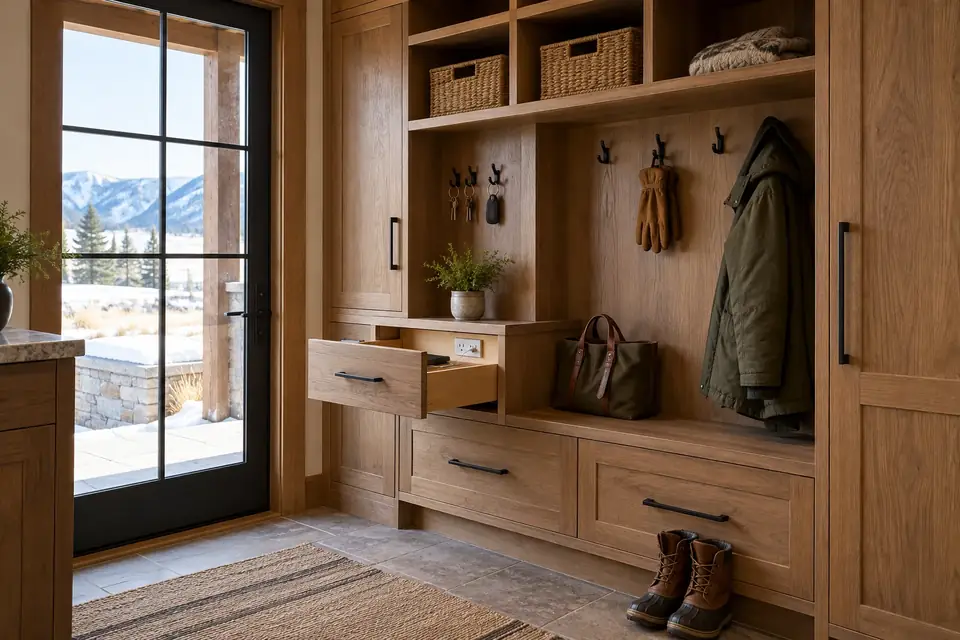
A drop zone for daily life
A narrow drop-zone wall with cubbies, key hooks and a shallow drawer with an outlet inside keeps phones charging and keys in one place. It is a small addition that saves time every single morning. We also add a shallow mail slot and a small corkboard or magnetic panel inside a locker door for school notices, permission slips and the weekly schedule, so paper stops piling up on the kitchen counter.
Plan for guests
Leave one spare locker or a set of hooks for guests. In a Montana winter, every visitor arrives with a coat, boots and a hat.
Wet boots, dry air
A mudroom sees the widest moisture swing in a Montana house. For a few minutes after everyone comes in, it is wet. By morning, the furnace has pulled the air bone dry again. Raw wood exposed to that cycle cracks and checks.
We finish every face of every part, use plywood for bench tops and cabinet floors, and keep solid wood to trim that stays dry. De-icer carried in on boots can stain some finishes, so we use catalyzed coatings that resist it.
What moves mudroom pricing
Mudroom cost depends mostly on the number of lockers and how much is closed storage.
Number of lockers
Each locker adds panels, hooks and a cubby.
Doors versus open fronts
Doors add material and hardware.
Trays and accessories
Boot trays, dryers and charging drawers add parts.
From ski days to calving season
A mudroom in town mostly handles ski gear and school bags. A mudroom on a ranch outside Manhattan or Three Forks handles calving jackets, muck boots and gear that has been in a barn. Both need the same thing: surfaces that clean easily and storage that dries what goes into it.
For working mudrooms we add a deep utility sink for washing up before coming into the house, hooks spaced for heavy canvas coats and a boot scraper at the door. Everything is built to be hosed off or scrubbed without damaging the finish.
Questions about mudroom cabinetry & built-ins
What is the best material for mudroom benches?
Plywood tops with a catalyzed finish, or a solid surface or stone top, stand up best to wet boots and bags. We avoid raw solid wood tops unless they are sealed on every face, because repeated wetting and drying cracks them.
How do I stop boots from making a mess in the mudroom?
Removable boot trays catch meltwater and road de-icer, and they lift out to clean. We build cubbies at least 14 inches tall to fit winter boots, and keep the cabinet floor sealed underneath.
Does a mudroom built-in need a permit in Manhattan, MT?
Cabinets are exempt from a building permit under IRC R105.2. Inside town limits, Manhattan runs its own certified building, plumbing and electrical programs, so any new outlet for a boot dryer or a utility sink needs a permit from the town.
Should mudroom lockers have doors?
Open lockers let wet gear dry faster. Doors hide clutter but trap moisture. We often use open lockers with a closed upper cabinet for off-season items, or ventilated doors that do both.
How wide should mudroom lockers be?
Fifteen inches works for a child and 18 to 24 inches suits an adult with winter gear. We size each locker to the person using it and the gear they bring home.
Can you add a boot dryer to a mudroom?
Yes. We build a cubby for the dryer with an outlet planned inside, and we vent it so the warm air escapes. Your electrician installs the outlet.
How long does a mudroom install take?
Most mudrooms install in a day or two. Shop time comes first once the layout is approved. We can install around your daily routine.
Can a mudroom include a pet station?
Yes. A pull-out drawer for bowls, a bin for food and hooks for leashes are easy to add. For a dog wash, a plumbing permit and a separate design step are needed.
How do I keep a mudroom from smelling of wet gear?
Air movement is the answer. Open or ventilated lockers, a small exhaust fan and trays that are emptied daily stop the damp smell. We avoid closed, unvented cabinets for anything that comes in wet.
Can a mudroom have a utility sink?
Yes. A deep utility sink in the mudroom is great for washing up after outdoor work, rinsing boots or bathing a dog. It needs a plumbing permit and a sealed sink base, both of which we plan with your plumber.
Work that pairs with mudroom cabinetry & built-ins
Mudrooms often sit next to the laundry and garage. These are common companion projects.
- Garage Cabinets & Storage
- Laundry Room Cabinets
- Custom Cabinet Design
- Cabinet Installation
- Painted Cabinet Finishes
- Custom Closet Cabinetry
The room that takes the winter so the house does notLockers, benches and drying cubbies built for Montana snow and mud.
Call 406-521-7523