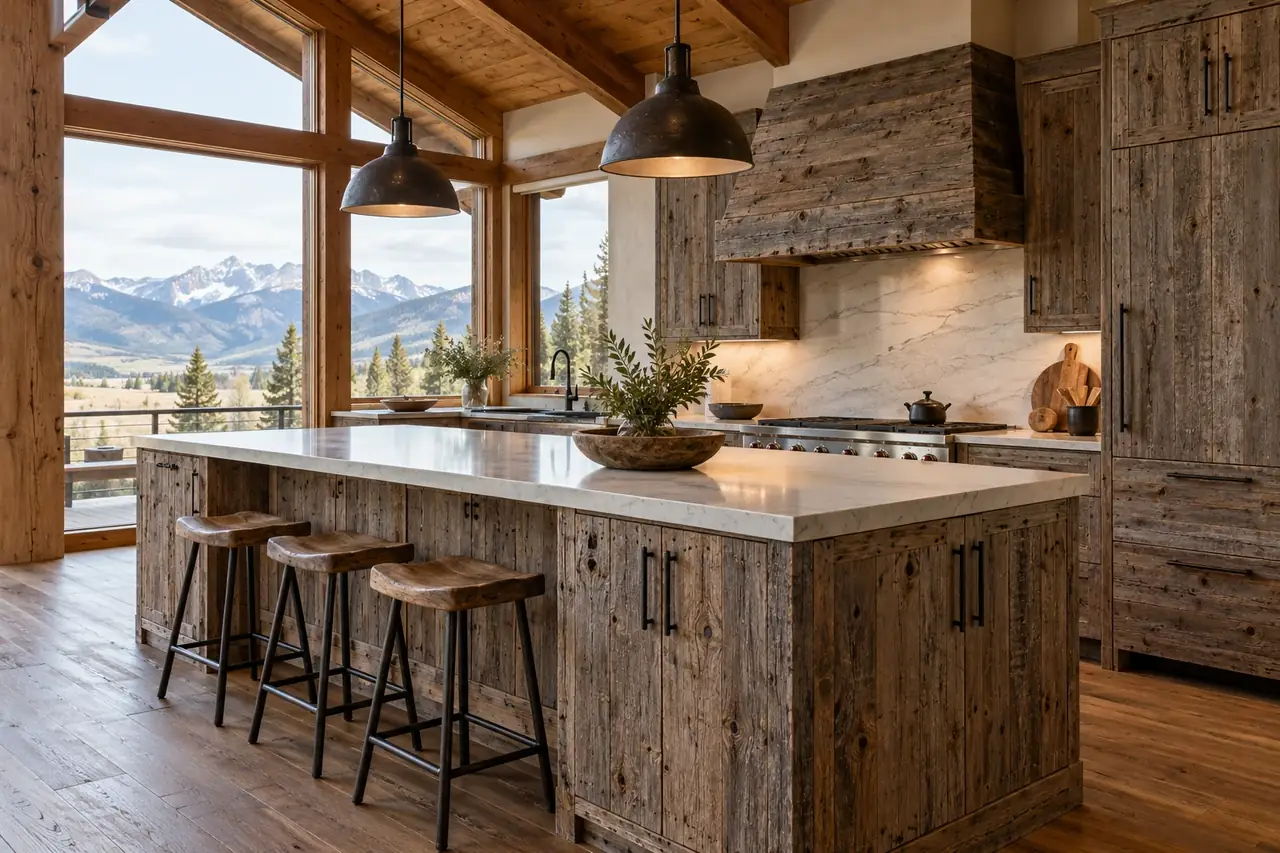
Rustic & Reclaimed Wood Cabinets in Bozeman, MT | Barn wood and rustic timber cleaned, dried and built to last indoors
Our team at Custom Cabinets Bozeman MT builds rustic and reclaimed wood cabinets from weathered barn wood, old-growth timber and rustic species such as knotty alder and hickory. We clean, de-nail and dry reclaimed boards, then build them over stable plywood boxes so the character stays and the problems do not.
Free design consultationTell us about the room. We call back to book a measure.
Rustic & Reclaimed Wood Cabinets in and around Bozeman MT
Reclaimed wood tells a story: nail holes, saw marks and a patina earned in decades of Montana weather. It also brings practical challenges: embedded metal, dirt, insects and moisture content that has nothing to do with a heated kitchen. We deal with all of those before a board becomes a door.
From barn to kitchen
Source
We select boards for colour, texture and soundness.
Prepare
Boards are cleaned, de-nailed and dried.
Build
Faces are built over plywood boxes.
Finish
A clear finish seals the patina.
Where reclaimed cabinets fail
| What goes wrong | Why it happens | What we do about it |
|---|---|---|
| Doors twist after install | Wood not dried to interior levels. | Dried and acclimated before building. |
| Hidden nail damages tools and cuts | Metal missed in preparation. | Metal detection on every board. |
| Surface sheds dust and splinters | No sealing finish. | Clear catalyzed finish over the patina. |
Rustic options beyond barn wood
Knotty alder
Warm colour and tight knots, widely used in mountain homes.
Rustic hickory
Very hard with strong colour variation between heart and sapwood.
Wire-brushed oak
New oak textured to raise the grain for a weathered feel.
Skip-planed wood
Boards planed lightly so some original surface remains.
How we prepare reclaimed wood
- Boards cleaned and brushed without losing their patina.
- Every nail and staple found with a metal detector and removed.
- Wood dried to interior moisture content before machining.
- A clear, durable finish that seals the surface.
Rustic done badly compared with rustic done well
| The usual approach | How we do it |
|---|---|
| Barn boards nailed onto cabinet fronts. | Prepared boards built into proper doors and panels. |
| Wood used straight from the barn. | Wood cleaned, de-nailed and dried first. |
| Dusty surfaces that shed splinters. | Clear finish that seals and protects the patina. |
| Kitschy props for a Montana look. | Honest materials that carry the style. |
Reclaimed wood construction
- Sources
- Barn siding, old beams and salvaged flooring
- Preparation
- Cleaning, metal detection and de-nailing
- Drying
- Dried to around 6 to 8 percent moisture content
- Boxes
- Plywood boxes behind reclaimed faces
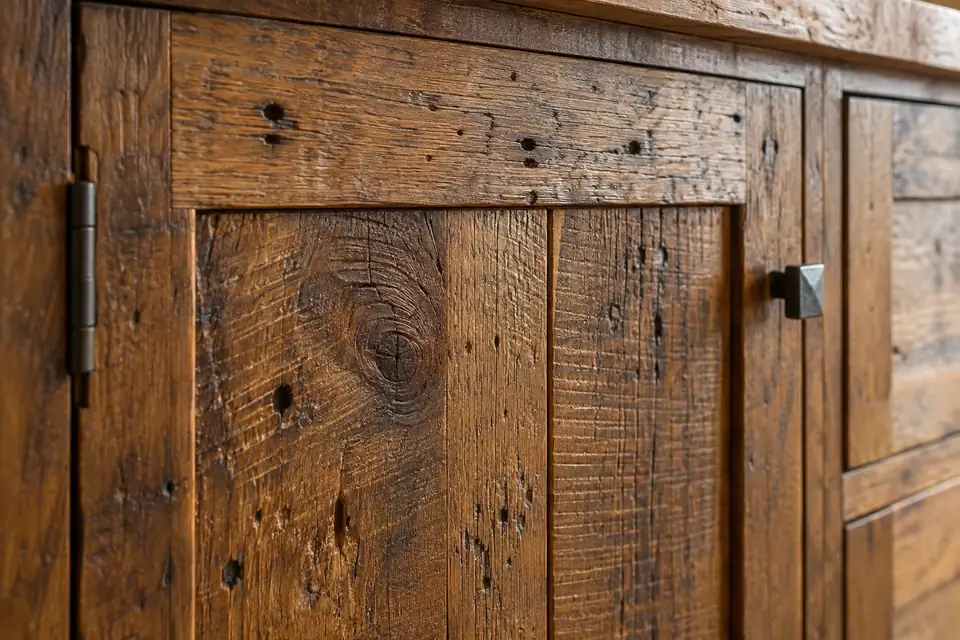
Character on the face, stability behind
Reclaimed boards are often twisted, cupped and uneven in thickness. We flatten only the back and edges, keeping the weathered face, then glue the boards onto stable substrates or use them in frame-and-panel doors where they can move.
The cabinet boxes behind are plywood. That keeps the structure square and the drawers running true while the faces carry all the history.
Rustic & Reclaimed Wood Cabinets: terms we use
- Patina
- The surface colour and texture wood gains from age, weather and use. Reclaimed wood is valued for it.
- De-nailing
- Finding and removing embedded nails, staples and wire from reclaimed boards before machining.
- Checks
- Small splits along the grain caused by drying. Common in old timber and sealed by the finish.
- Kiln drying
- Drying wood in a heated chamber to a target moisture content. It also kills insects in reclaimed timber.
Why reclaimed wood must be dried again
Barn wood that has sat outside in Montana weather for decades is dry by outdoor standards, but outdoor dry is not indoor dry. Outdoor wood in the region often sits well above the 6 to 8 percent moisture content suited to a heated home.
Built wet, reclaimed boards shrink, twist and open gaps in the first winter. We dry them to interior conditions and let them rest in a heated space before machining. Kiln drying also kills insects that may be living in old timber.
Using your own barn wood
If you have wood from a family barn or ranch, we can often use it. It needs the same cleaning, drying and inspection as any reclaimed stock.
Bring us a few boards early, so we can check condition, quantity and moisture before the design is final.
Before planning reclaimed cabinets
- Photos of the look you want.
- Whether you have your own salvaged wood.
- How much rustic character you want.
- Countertop and hardware choices.
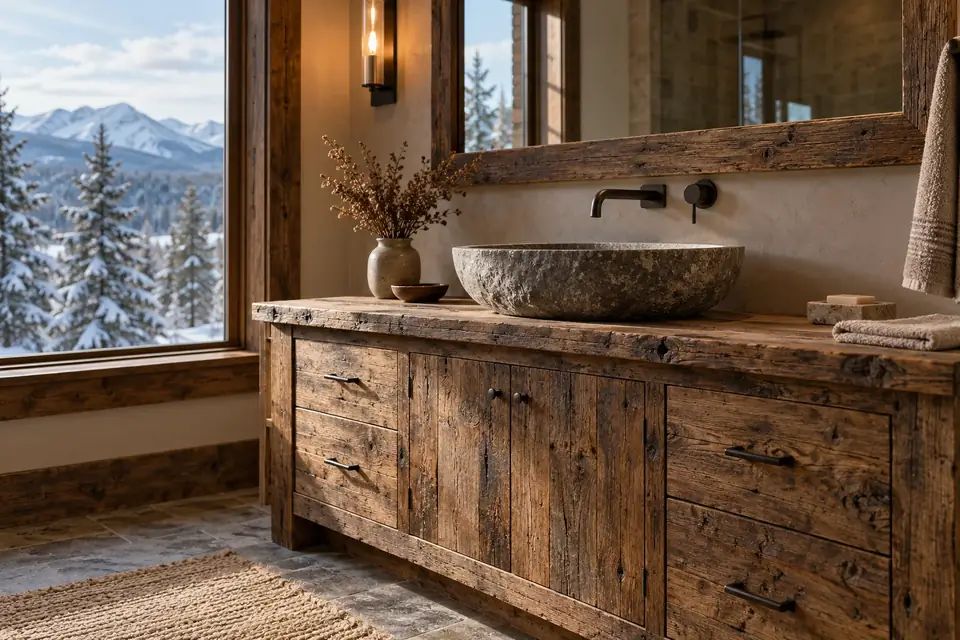
Reclaimed vanities and furniture pieces
Reclaimed wood suits bathroom vanities and furniture-style pieces especially well, where a single cabinet can carry the character without overwhelming the room. Paired with stone and simple fixtures, it feels grounded rather than theatrical.
In bathrooms, we seal every face carefully because weathered wood can have open checks and cracks that would otherwise take on water.
Montana barns and ranch heritage
The Gallatin Valley was farmed long before it was known for skiing, and old barns, granaries and ranch buildings still dot the landscape. When they come down, their weathered siding and beams are prized for rustic interiors.
Using wood from a nearby ranch gives a kitchen or bar a direct link to local history. We ask about the source and document it where possible, which many clients value as much as the look.
We steer away from Montana clichés such as antler hardware and carved wildlife. The wood itself carries enough character.
Supply of good barn wood is limited and uneven, so for larger kitchens we often combine reclaimed faces on key pieces with new rustic alder or oak elsewhere, finished to blend.
What reclaimed wood costs depend on
Reclaimed wood can cost more than new lumber once preparation is included.
Source and quantity
Matching boards in large quantities is harder and costs more.
Preparation time
Cleaning, de-nailing and drying take labour.
Waste
Rot, splits and hidden metal mean more offcuts.
Questions about rustic & reclaimed wood cabinets
Is reclaimed wood safe for kitchen cabinets?
Yes, when it is properly cleaned, de-nailed, dried and sealed. We inspect every board, remove metal and apply a durable clear finish so the surface is easy to clean and does not shed dust.
Do cabinets in a ranch shop near Sedan need a permit?
Usually not. Sedan is unincorporated Gallatin County, and Montana law exempts farm and ranch buildings of any size from the state building code under MCA 50-60-102. Cabinets are finish work regardless. New wiring or plumbing still needs state permits.
Does reclaimed wood have bugs?
Old timber can host insects. Kiln drying to interior moisture content kills them, which is one reason we dry reclaimed wood before building. Heat treatment during drying reaches the centre of the board, which surface sprays cannot do.
Will reclaimed wood cabinets warp?
Not if the wood is dried to interior conditions first and built over stable plywood boxes. Warping happens when outdoor-dry wood goes straight into a heated house.
Can I use wood from my own barn?
Often yes. Bring a few boards early so we can check condition, quantity and moisture. It needs the same preparation as any reclaimed wood.
How do you keep the weathered look?
We flatten only the back and edges, clean the face gently, and use a clear finish that seals without adding shine or darkening too much. A satin or matte sheen keeps the weathered look natural rather than glossy.
Is reclaimed wood more expensive?
It can be, once cleaning, de-nailing, drying and waste are included. The cost depends on the source and how much matching is needed.
What is the difference between rustic and reclaimed?
Reclaimed wood has had a previous life, such as barn siding. Rustic describes a look, which can come from reclaimed wood or new wood such as knotty alder or wire-brushed oak.
Can reclaimed wood be used in a bathroom?
Yes, with careful sealing on every face. Weathered wood often has checks that must be sealed against water. We also keep reclaimed faces away from direct splash zones where possible, using stone or tile for the wettest areas.
Does reclaimed wood smell?
Freshly prepared barn wood can smell earthy. Drying and finishing seal most of that. A faint wood smell in the first weeks is normal. If an odour lingers, a few weeks of good ventilation usually clears it completely.
Work that pairs with rustic & reclaimed wood cabinets
Rustic work pairs well with natural materials. These services often go with it.
- Live-Edge Wood Cabinetry
- Hardwood Cabinetry
- Solid Wood Cabinets
- Bar & Wet Bar Cabinetry
- Kitchen Cabinets
- Custom Stained Cabinets
Old wood with a new structure behind itBarn wood and rustic timber, cleaned, dried and built to last.
Call 406-521-7523