
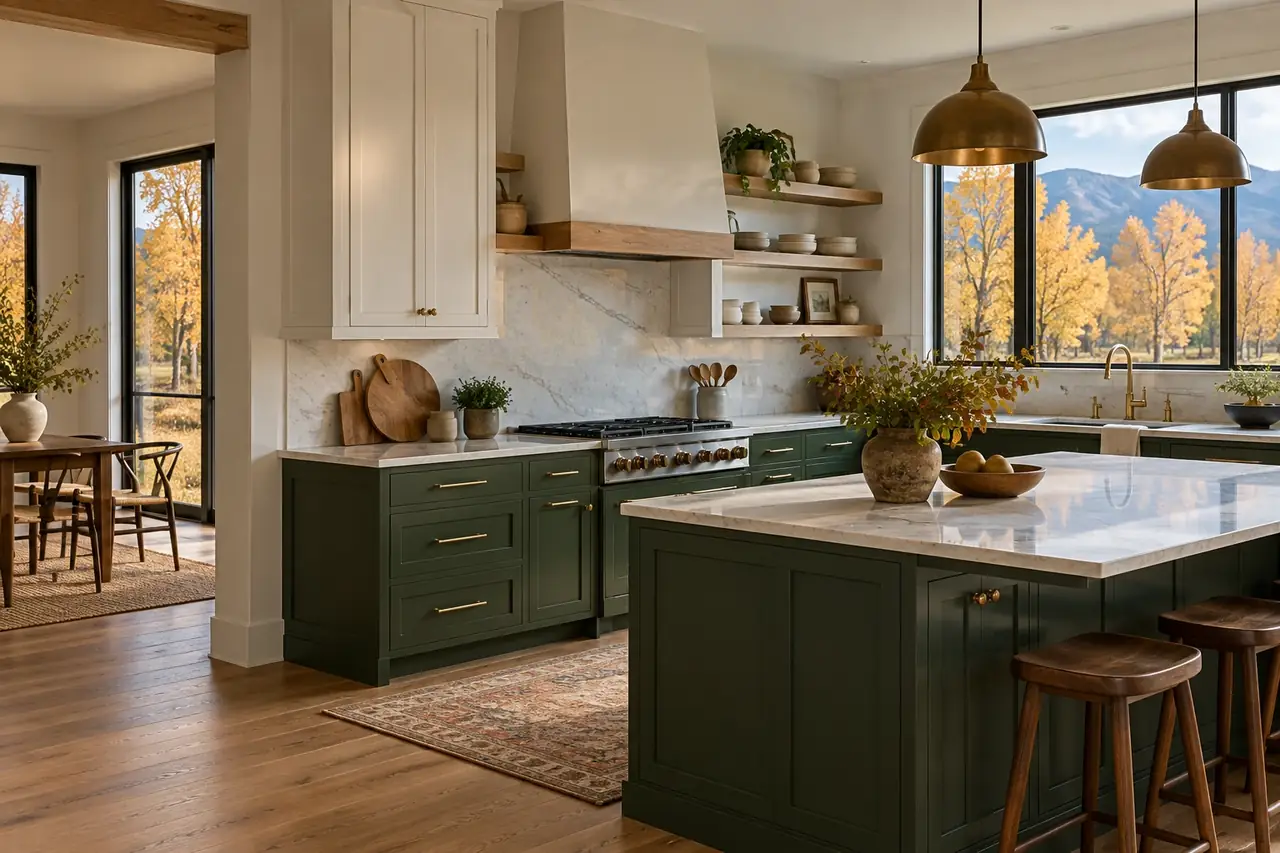
Two-Tone Cabinet Design in Bozeman, MT | Paint and wood, or two colours, balanced so the mix looks intentional
We're Custom Cabinets Bozeman MT, and we design and build two-tone cabinets: painted uppers over wood bases, a stained island in a painted kitchen, or two paint colours that anchor a room. We plan where each finish goes and test the pairing in your light, so the result looks deliberate rather than mismatched.
Free design consultationTell us about the room. We call back to book a measure.
Two-Tone Cabinet Design in and around Bozeman MT
Two-tone design adds depth and can make a large kitchen feel less monolithic. It also adds decisions: which cabinets get which finish, how colours relate to floors and counters, and how the pairing reads in morning and evening light. We guide those choices with real samples.
Designing a two-tone kitchen
Palette
We start from floors, counters and fixed finishes.
Rules
We decide which cabinets carry which finish.
Samples
Pairs are tested in your room light.
Build
Each finish is applied in the shop and matched.
Design rules we follow
Visual weight
Darker finishes low and lighter finishes high keep a room grounded.
Proportion
The secondary finish usually covers less area than the primary.
Tone links
Undertones in both finishes should relate, warm with warm or cool with cool.
Repetition
Repeating the second finish elsewhere, such as shelves, ties the room together.
Two-tone done randomly compared with planned
| The usual approach | How we do it |
|---|---|
| Finishes swapped wherever it feels right. | A clear rule, such as uppers light and bases dark. |
| Colours picked from small chips. | Full samples viewed together in your room. |
| Hardware that matches one finish only. | Hardware chosen to work with both. |
| Awkward finish changes mid-run. | Finish breaks at natural panels or corners. |
What makes two-tone work
- A clear rule for which cabinets get which finish.
- Colours tested together in your room light.
- Hardware that bridges both finishes.
- Floors and counters considered as part of the palette.
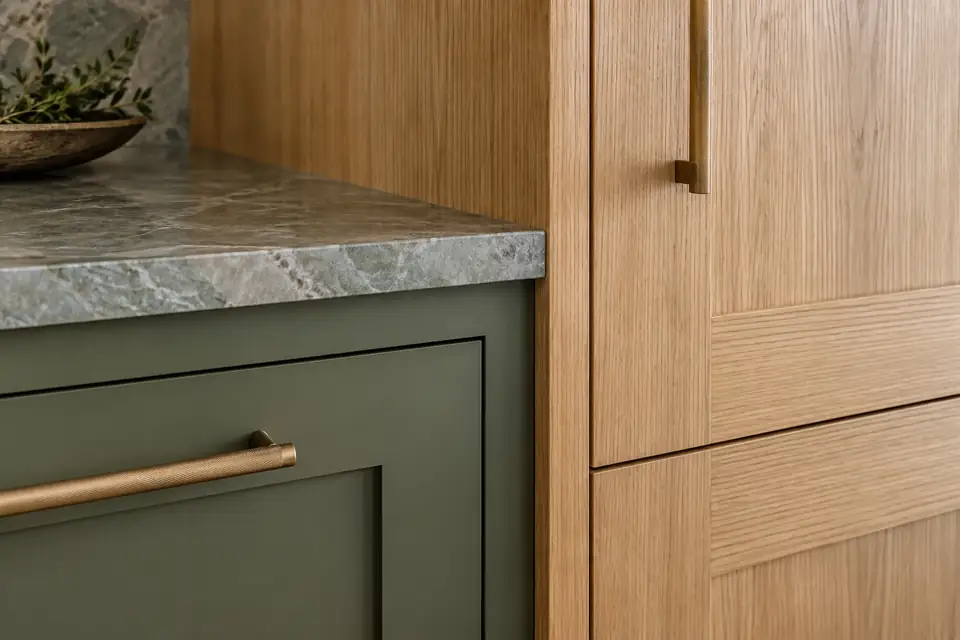
Where the finishes meet
The point where two finishes meet is where two-tone designs succeed or fail. We decide these junctions on the drawings: a painted base against a wood tall cabinet needs a clean vertical line, often at a panel or filler, rather than a finish change mid-door.
We also watch for sightlines. A dark island seen against dark lower cabinets can disappear, while a light island against dark bases stands out. We choose based on what you want the eye to see.
Common two-tone combinations
- Light over dark
- Painted uppers with wood or dark painted bases
- Contrasting island
- A wood or colour island in a painted kitchen
- Tall versus base
- Wood tall cabinets beside painted bases
- Two colours
- Two paint colours of related tone
Two-tone mistakes
| What goes wrong | Why it happens | What we do about it |
|---|---|---|
| Island disappears | Island finish matches the bases. | Contrast planned on sightlines. |
| Colours clash | Undertones not considered. | Samples compared together in daylight and lamplight. |
| Busy look | Too many finish changes. | One clear rule for the room. |
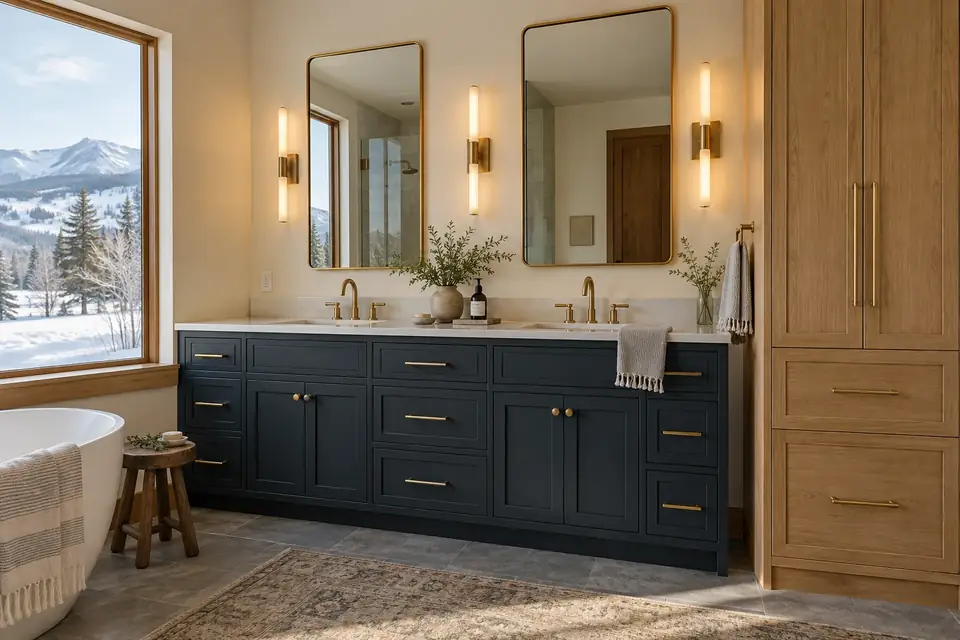
Two-tone beyond the kitchen
Two-tone works in bathrooms too. A navy or green vanity beside a natural wood linen tower gives a small room depth without clutter.
In mudrooms, painted lockers with a natural wood bench top combine durability and warmth.
We check the combination against tile and stone samples so the whole room works together.
Start with what cannot change
Floors, stone and fixed finishes rarely change. We start colour choices from them, then fit the two cabinet finishes into that palette.
Bring those samples to the design meeting, and we will build the scheme around them.
Before planning two-tone
- Floor and countertop samples.
- Paint colours you like.
- Photos of two-tone rooms you like.
- Whether the island should stand out.
Two-Tone Cabinet Design: terms we use
- Undertone
- The subtle colour beneath a main colour, such as the warmth in a white or the grey in a green. Matching undertones makes two finishes look related.
- Visual weight
- How heavy a colour or material appears. Dark and saturated finishes feel heavier than light ones.
- Sightline
- The line of view from a doorway or seat. We plan contrasts based on what you see from where you stand.
- Accent finish
- The secondary finish in a two-tone scheme, usually covering less area than the main finish.
What changes the cost of two-tone cabinets
Two-tone adds planning and finishing steps. These are the main cost drivers.
Number of finishes
Each finish needs its own spray setup and samples.
Species for the wood portion
Premium woods raise cost.
Complexity of breaks
More finish changes need more careful building.
Colour in a Montana winter
Winter in the Gallatin Valley brings months of white snow and grey sky outside the windows. Clients often choose a deeper colour, such as forest green, navy or warm clay, for the lower cabinets or island to add warmth inside.
In summer, the same rooms fill with bright high-elevation light. Colours that look rich in December can look lighter in July, so we view samples at different times of day.
Earthy greens and blues that echo the landscape are popular here, paired with natural oak or walnut.
Two-tone schemes are also a practical way to update a kitchen in stages. Painting the lower cabinets now and adding a wood island later spreads the cost, as long as the overall palette is planned from the start.
Paint and wood age differently
In strong mountain light, wood and paint age at different rates. A white oak base may amber slightly while the painted upper stays the same, so a pairing that matched perfectly on day one can drift.
We choose finishes with UV absorbers for the wood and explain how the pairing will change, so you choose colours that still work together in five years.
Questions about two-tone cabinet design
Which cabinets should be the darker colour in two-tone?
Usually the lower cabinets or island. Darker finishes low keep a room grounded, and lighter finishes high keep it open. There are exceptions, but it is a reliable starting rule.
Does a two-tone kitchen update in Central Park, MT need a permit?
No. Central Park sits in unincorporated Gallatin County under state jurisdiction, and refinishing or replacing cabinets is finish work exempt from building permits. Any plumbing or electrical changes need state permits through licensed trades.
Is two-tone a trend that will date?
Two-tone has been used for decades in different forms. Timeless pairings, such as wood with paint or two related colours, age better than bold trends. Pairings based on natural materials, such as oak with a muted paint colour, are the safest long-term choices.
How do I choose two cabinet colours?
Start from floors and counters, then choose colours with related undertones. Test full samples together in your room, morning and evening.
Can an island be a different wood?
Yes. A walnut or oak island in a painted kitchen is one of the most popular two-tone schemes. The island is also the easiest place to experiment, because it can be refinished later without touching the rest of the kitchen.
Should hardware match both finishes?
Choose hardware that works with both. Brass and black iron bridge many combinations. Warm metals suit warm colours and wood, while black suits most schemes and reads well against both light and dark finishes.
Can two-tone work in a small kitchen?
Yes, with restraint. Light uppers and a mid-tone base can make a small kitchen feel larger. Keeping the counter and backsplash light helps the two cabinet finishes read clearly without crowding the room.
Can you add two-tone to existing cabinets?
Yes, by refinishing some cabinets in a new colour or adding a new island. We plan the break points carefully. Refinishing only the lower cabinets is often the simplest route, since uppers stay in place and keep their existing finish.
What goes with green lower cabinets?
Warm whites, natural oak, brass hardware and stone tops all pair well with green bases. Aged brass or unlacquered brass in particular deepens nicely next to green over time.
How many finishes are too many?
More than two main finishes usually makes a room busy. A third accent, such as open shelves, can work if it repeats elsewhere. If you want a third finish, keep it small and repeat it at least twice in the room so it feels planned.
Work that pairs with two-tone cabinet design
Two-tone draws on both painting and staining skills. These services connect to it.
- Painted Cabinet Finishes
- Custom Stained Cabinets
- Custom Cabinet Design
- Kitchen Cabinets
- Shaker Style Cabinets
- Cabinet Refinishing & Painting
Two finishes, one coherent roomPaint and wood, or two colours, balanced in your own light.
Call 406-521-7523